
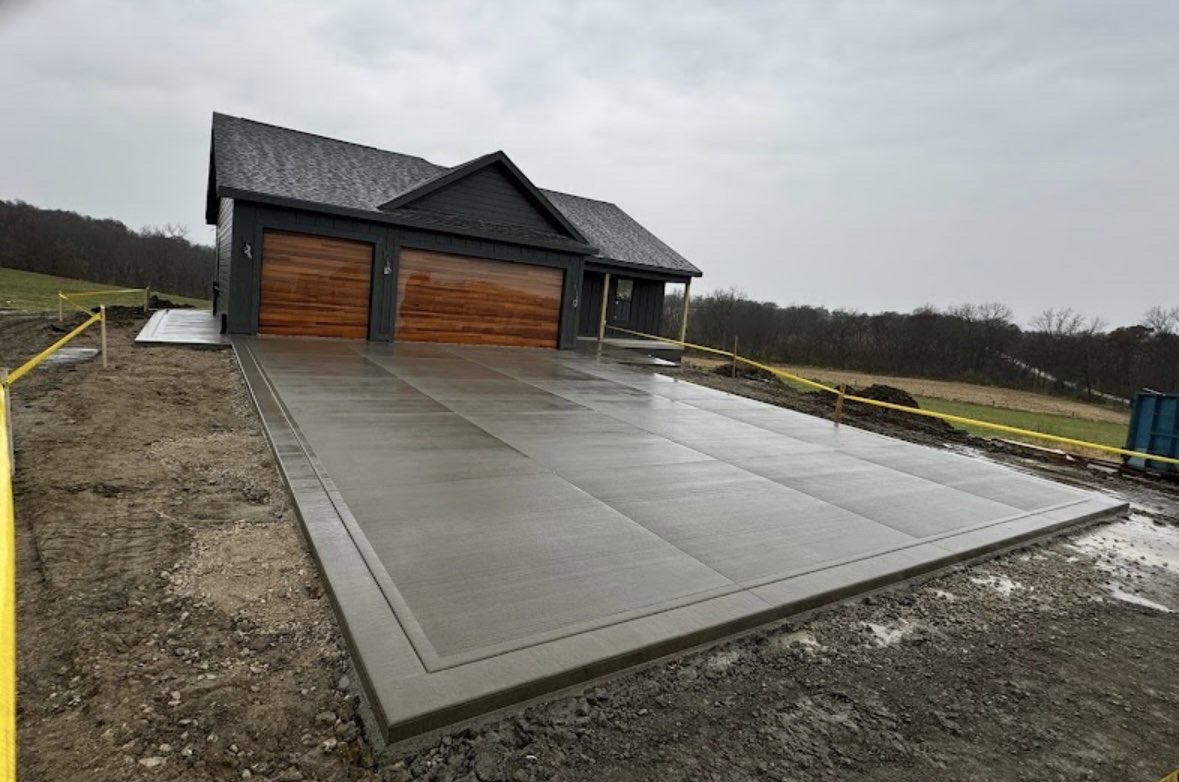
Concrete Work in Pleasant Hill, IA
Green Thumb Outdoor Solutions is the local concrete contractor Pleasant Hill residents call when they want thick, reinforced, sealed concrete that lasts decades. a quieter east-metro community offering larger lots, acreages, and a more rural feel just minutes from downtown Des Moines. That larger suburban lots mix means every Pleasant Hill concrete project needs a slightly different approach — and we tailor each one.
Doing Concrete Right in Pleasant Hill, Iowa
The gap between a good concrete contractor job and a bad one in Pleasant Hill is almost always in the prep phase. We over-invest in the parts nobody sees — base compaction, drainage, fastener choice, sub-material selection — because that's what determines whether the finished work holds up through Pleasant Hill's rolling acreages with mature timber.
Walkways & Sidewalks
Smooth or stamped finishes
Driveways
5" plus pours with rebar reinforcement
Steps & Stoops
Custom poured-in-place builds
Decorative Concrete
Stamped, colored & exposed aggregate
Concrete Work Near You in Pleasant Hill
We serve all of Pleasant Hill, from neighborhoods near Copper Creek to homes along Southeast Connector and University Avenue. Pleasant Hill's larger properties often benefit from our retaining wall and drainage expertise.
Local Notes: Concrete Work in Pleasant Hill
Pleasant Hill acreages often have long driveways — real concrete driveway work with proper thickness, control-joint spacing, and reinforcement. Older 1970s Pleasant Hill homes have original driveways at end of life due for full tear-out and repour.
4,000 PSI air-entrained mix, 5 in walks / 6 in drives, #4 rebar grid on 18-inch centers, tooled or sawn control joints, penetrating sealer. Pleasant Hill permits handled. Long-drive pours planned for pump-truck access — we bring the equipment for the scale.
Common Concrete Work Problems We See in Pleasant Hill
These are the issues Pleasant Hill homeowners call us about most — and what actually causes them.
Undersized pours failing under vehicles
Four inches of concrete with no reinforcement will not hold a truck or an RV. Driveway approaches and parking pads in Pleasant Hill need thicker sections and rebar, or they crack across the wheel path within a few winters.
Spalled, flaking driveway surfaces
Winter de-icing salt plus a thin or non-air-entrained pour equals a surface that peels off in sheets. Once the aggregate is exposed on a Pleasant Hill driveway, sealers only slow it down — the top layer is already compromised and will keep shedding each spring.
Cracks that keep getting wider
Hairline shrinkage cracks are normal. Cracks you can fit a nickel into mean the slab moved, usually because the base was never compacted or the control joints were cut too shallow. Locally that means dealing with rolling acreages with mature timber, Four Mile Creek-influenced drainage, dramatic grade changes that beg for retaining walls, and clay soil with frequent runoff issues. Soil that swells and shrinks makes that worse every season.
Settled steps and trip hazards
Front stoops and sidewalk panels on larger suburban lots, walkout ranches stepped into hillsides, two-story 90s–2000s builds, and select 1–5 acre properties near the city edges in Pleasant Hill settle where backfill was never compacted. A one-inch lip is a liability at the front door and a code problem in a public walk.
Our Concrete Work Process in Pleasant Hill
Exactly what happens from the first call to the final walkthrough at your Pleasant Hill property.
- 1
Measure and spec
We measure the area, check the existing base, and specify thickness, mix, and reinforcement for the actual use — foot traffic, daily vehicles, or heavy loads. You get that spec in writing.
- 2
Demolition and haul-off
Old concrete is broken out and hauled away, not buried on site. We locate utilities first and protect adjacent turf and landscape beds.
- 3
Base and forms
Granular base is placed and compacted to grade, forms are set and checked with a laser or level for correct pitch away from the structure, and reinforcement is tied and chaired off the subgrade.
- 4
Pour and finish
We place 4,000 PSI air-entrained mix, screed, float, and finish to the texture you chose — broom for traction on Pleasant Hill driveways and walks. Control joints are tooled or saw-cut at proper spacing and depth.
- 5
Cure and seal
The slab is cured properly before traffic, typically 24 hours for foot and seven days for vehicles. We recommend a penetrating sealer after the initial cure window and can apply it for you.
Why Concrete Work Matters for Pleasant Hill Properties
Local specifics matter for permits and access too. We know which Pleasant Hill pours need right-of-way approval, how tight the alley access is on older blocks, and how to stage a truck on a narrow drive without damaging your lawn. That is routine for us because we pour here every season, not once a year.
Concrete in Pleasant Hill lives a hard life. Salt, plow blades, and a freeze-thaw count that runs into the dozens each winter attack the surface, while Locally that means dealing with rolling acreages with mature timber, Four Mile Creek-influenced drainage, dramatic grade changes that beg for retaining walls, and clay soil with frequent runoff issues. works on the slab from underneath. That combination is why so much of the flatwork poured here in the 70s and 80s is failing now, and why cutting corners on base or mix is a false savings.
Why Pleasant Hill Homeowners Hire Green Thumb Outdoor Solutions
Real reinforcement
Rebar on grid, not fiber alone or a token sheet of mesh dropped on the dirt after the truck arrives.
Correct thickness for the use
Five inches for walks and patios, six for driveways and approaches — quoted honestly rather than shaved to win a bid.
Permits handled
When a Pleasant Hill pour touches the right-of-way or approach, we pull the permit and coordinate the inspection.
Clean joints and edges
Straight forms, consistent joint spacing, and tidy edges. Concrete is permanent; the details are what you look at for 30 years.
Free on-site measurement and quote anywhere in Pleasant Hill. Ask us what mix and thickness we are specifying — we will show you.
Concrete Work FAQ — Pleasant Hill, Iowa
Honest answers from local concrete contractors serving Pleasant Hill and Central Iowa.
Can you handle both residential and commercial concrete contractor in Pleasant Hill?▾
Yes. Most of our Pleasant Hill work is residential (from Copper Creek bungalows to Oakwood Hills new-builds), but we also handle small commercial properties, HOA common areas, and property-management portfolios. Fully insured for both, references available.
How much does concrete work cost in Pleasant Hill, IA?▾
Most concrete work projects in Pleasant Hill land between $1,800 to $15,000+, and the final number comes down to scope, materials, and what the site actually needs. We walk every Pleasant Hill property in person before quoting — no phone-guess pricing, no bait numbers.
How long does concrete work take in Pleasant Hill?▾
Expect 1–4 days plus cure time for most Pleasant Hill concrete contractor projects. We build the schedule around Pleasant Hill's weather windows and stick to it — same crew from day one to punch list, no subbing out mid-project.
What materials do you use for concrete work in Pleasant Hill?▾
We pour 4000+ PSI concrete with proper rebar and fiber mesh reinforcement, then seal every Pleasant Hill job to protect against road salt and freeze-thaw damage. We'll walk you through the material options on-site in Pleasant Hill so you understand the trade-offs before you sign anything.
Are you licensed and insured in Pleasant Hill?▾
Every Pleasant Hill project we run is covered by full general liability plus workers' comp — no exceptions, no "day laborer" gaps. That's part of why Pleasant Hill homeowners keep referring us to neighbors.
Do you offer free estimates in Pleasant Hill?▾
Pleasant Hill estimates are always free and always on-site — never a "ballpark over the phone." That walkthrough is where we catch the details that make or break a concrete contractor project.
Can you pour concrete in the winter here?▾
We can pour into late fall and early winter using heated mix, accelerators, and insulating blankets, but there is a hard cutoff. If conditions make a durable pour unlikely at your Pleasant Hill address, we will tell you to wait rather than risk the slab.
Should I seal my new concrete?▾
Yes. A penetrating sealer applied after the initial cure and refreshed every two to three years dramatically slows salt damage on Pleasant Hill driveways and walks. It is the cheapest maintenance you can do.
Do you repair concrete or only replace it?▾
We do both, and we are direct about which makes sense. Isolated cracks, settled panels, and joint repair are worth doing. A driveway that is spalled across the whole surface is past repair and we will say so.
Will new concrete match my existing slab?▾
Fresh concrete always starts lighter and darkens over months, so an exact match to a 20-year-old slab is not realistic. Where appearance matters we recommend replacing the full section or adding a broom or exposed finish that reads as intentional.
How thick should a driveway be in Pleasant Hill?▾
Six inches of 4,000 PSI air-entrained concrete over a compacted granular base with #4 rebar on an 18-inch grid is our standard for Pleasant Hill driveways. Four inches is common on cheap bids and is the reason so many local driveways crack across the wheel path.
Concrete Work Near Pleasant Hill
Pleasant Hill sits in the middle of our concrete service footprint. If you're on the border, we probably serve your neighborhood too — check the closest cities below.
Book a Free On-Site Concrete Estimate in Pleasant Hill
Call or send a message — we'll be at your Pleasant Hill property within the week for a full walkthrough. No high-pressure closer, no "today-only" pricing tricks.